
The Stories Behind the Stories
Hidden Treasures: Searching for Shared Values While Seeking to Preserve Unique Cultures
Not unlike balancing spinning plates atop long poles, searching out the values that undergird and thus inform a people while at the same time attempting to isolate, identify and to retain intact characteristics specific to that people is a balancing act like few others.
The Vietnam Conflict
It was the Vietnam turmoil (late 1960s – 1970s) that introduced me intimately, and at times painfully, to a cluster of Southeast Asian countries and their cultures. My work in the International School by day, and at the American University in Bangkok by evening brought me face to face with many of the peoples of this region. My little Thai house on a busy klong (canal) hosted a Thai university student (offering insights into the youth culture), later Asian travel agents (for vast amounts of valuable logistical and historical information), a Thai cook (and her exquisite Thai cuisine), and an Amma (for child care, and language and domestic instruction). By immersing myself in the community life of Bangkok, into my life came professionals, laborers, adults and children – the spectrum.
From Bangkok it was with travel ease that I could visit Laos, take a jeep high into the mountain villages of the Hmong, trek the jungles of Cambodia and marvel at their storied Angkor Wat and other Khmer magnificiences. Burma (now Mayanmar) was closed to us at that time, but in time entrance was granted into Vietnam itself. Hong King, Taiwan, and Mainland China were also integral to this extraordinary education.
The Fall of Saigon
April of 1975 – the infamous date of the fall of Saigon (later the city would be renamed Ho Chi Minh City), marked a time of chaos and change. Lives of many thousands of Asians changed radically from that time forward. My life too.
Because of my work in the region, it was a natural that I would volunteer to work with the incoming refugees from those countries. It was through this work that I could see the need for cultural bridges between what those peoples had known and what they were coming to know because of their new lives in the U.S. It was because of the many coincidences during this time that I came to know and then to collaborate with persons of great resource and talent
Tent Cities of Displaced People
Military camps and facilities across the U.S. converted over night into communities accommodating waves of incoming Southeast Asians… not coming from Vietnam only, but from Laos and Cambodia, and even from the remote mountainous regions came people representing numerous tribes and different ethnicities.
Ethnic Collaborators, Co-authors, Artists, and Artisans… and many, many wondrous friends
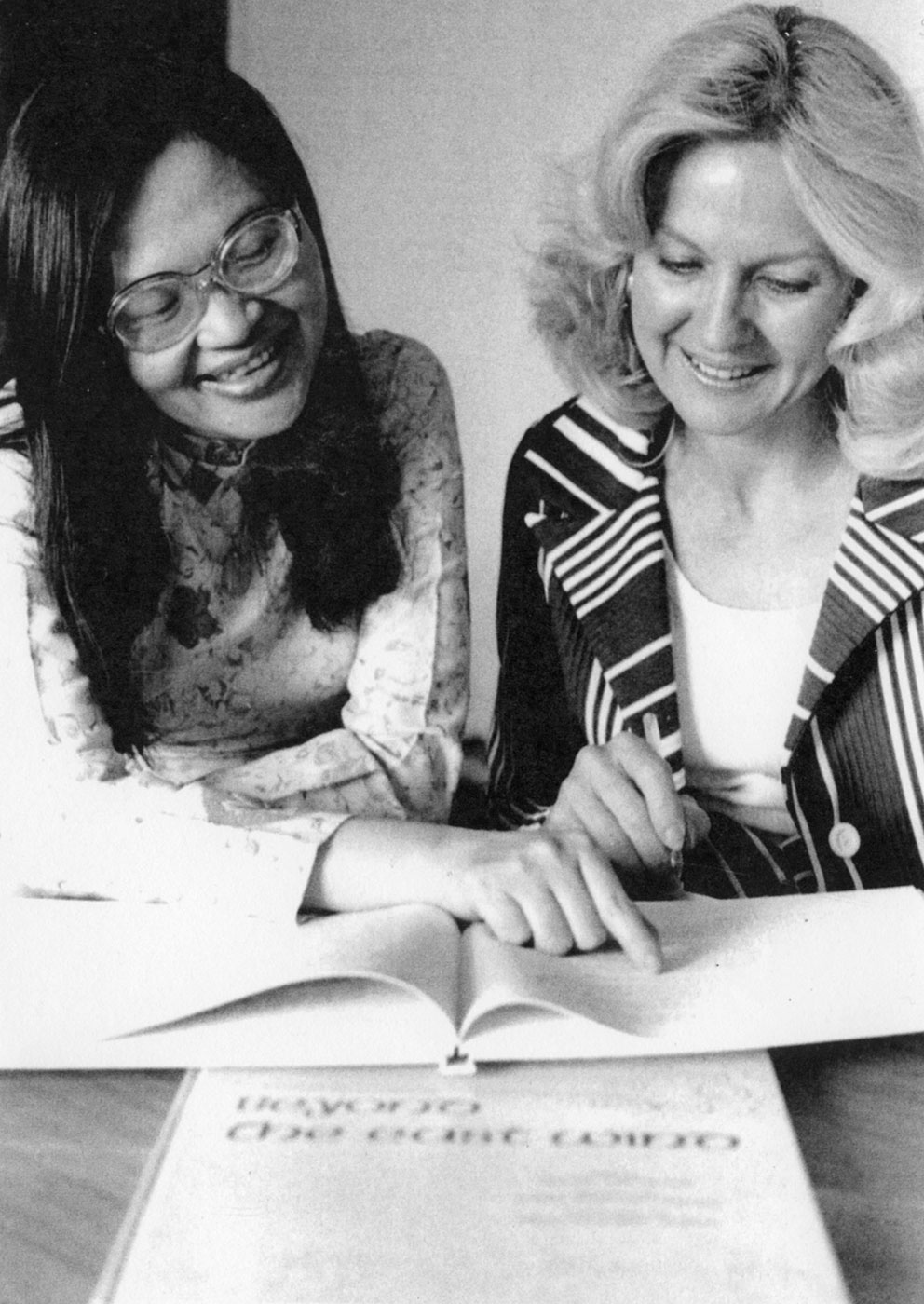
Duong Van Quyen and Dr. Coburn
Duong Van Quyen (along with her extended Vietnamese family numbering 26)
Quyen had earned an M.A. from an American university. She had returned and was working with the Ministry of Education in Saigon. Soon upon our meeting, we put our thoughts together and the result: BEYOND THE EAST WIND: Legends and Folktales of Vietnam, therefore preserving the very most representative, and best loved folk stories for her own people. This book served as a bridge to greater understanding by those in this, these peoples’ new country.
Dr. Coburn, Sinal Chan, and Nena Grigorian Ullberg
Sinal Chan, (a Cambodian educator, well versed in his own nation’s best stories), came to work with me and Nena Grigorian Ullberg (Illustrator) and together we produced KHMERS, TIGERS, AND TALISMANS: From the History and Legends of Mysterious Cambodia, a historical novella with 10 of Cambodia’s best loved folktales woven in.
Two highly gifted Laotians came into my life: Dr. Bolyvong Tanovan and Maikou Xiong (later to complete her M.A. in Education and for years by now has taught in our own nation’s schools). From this association came ENCIRCLED KINGDOM: Legends and Folktales of Laos, and later with MaiKou Xiong, came JOUANAH: A Hmong Cinderella, and soon after came ENCHANTED NECKLACE: The Wisdom of the Hmong Speaks to us Today.
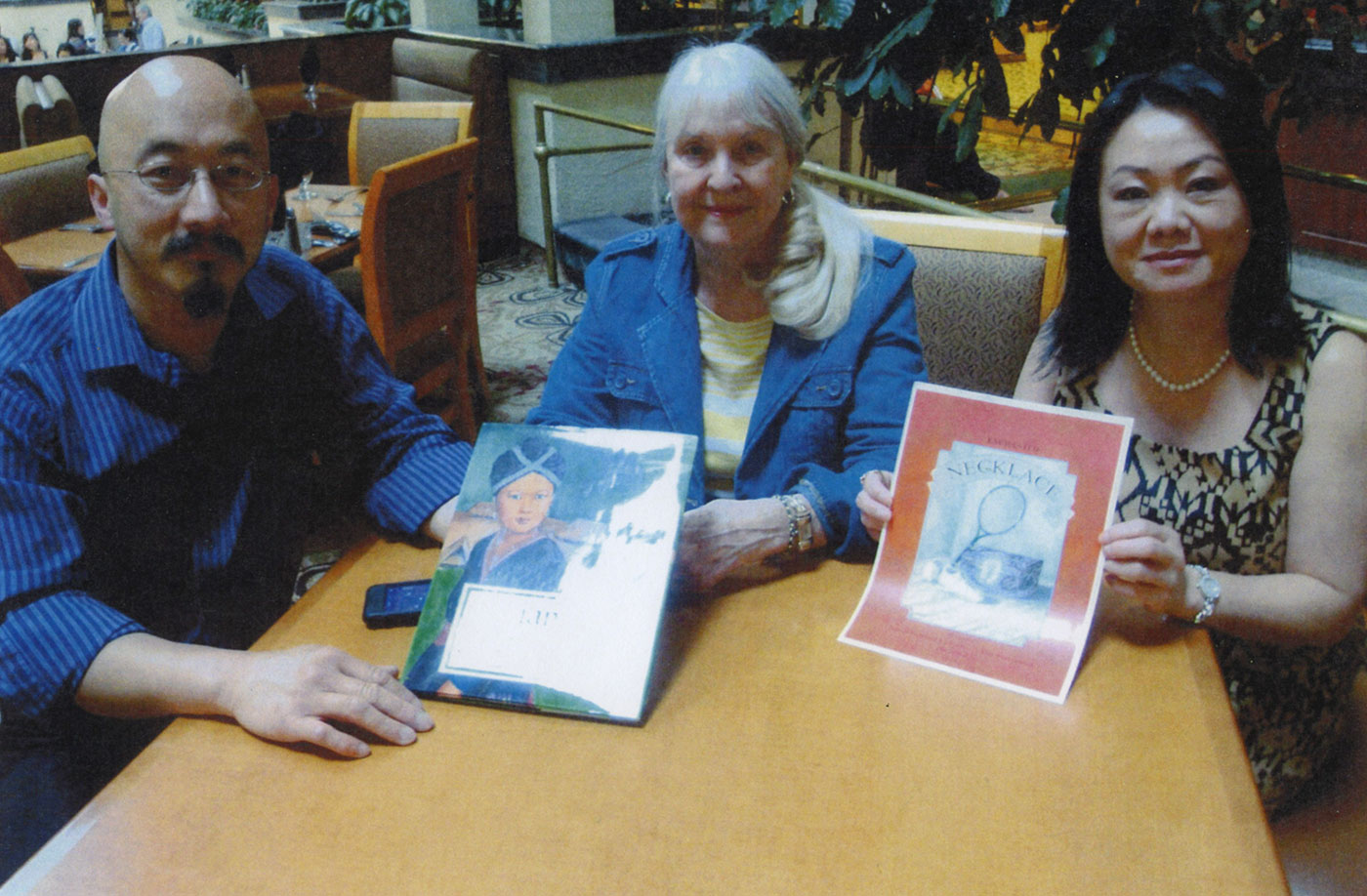
Ma Ly, Dr. Coburn, and Maikou Xiong
The Illustrators and Art Contributors
Nena Grigorian Ullberg (beginning the first three literary projects at age 78) created the charming, mythical art found in the story collections of the first three award-winning Vietnamese, Cambodian, and Lao books. For each book, Nena worked closely with Dr. Coburn, and with representatives from each specific culture, thus achieving a high level of authenticity.
Rangsith Lang (a professional Laotian artist who worked for his government in his home country and created the intricate designs used in his nation’s postage stamps). See Mr. Lang’s exquisite work as page borders in ENCIRCLED KINGDOM: Legends and Folktales of Laos.
The Priority of Artistic Authenticity
Ma Ly (a professional Hmong artist specializing in portraiture) worked closely with Dr. Coburn and with Maikou Xiong to further the telling of the little known history behind the unique piece of jewelry in ENCHANTED NECKLACE: The Wisdom of the Hmong Speaks to us Today. Mai Yang Thor and Pa Vang (Hmong university students) served as models for the story’s main character.
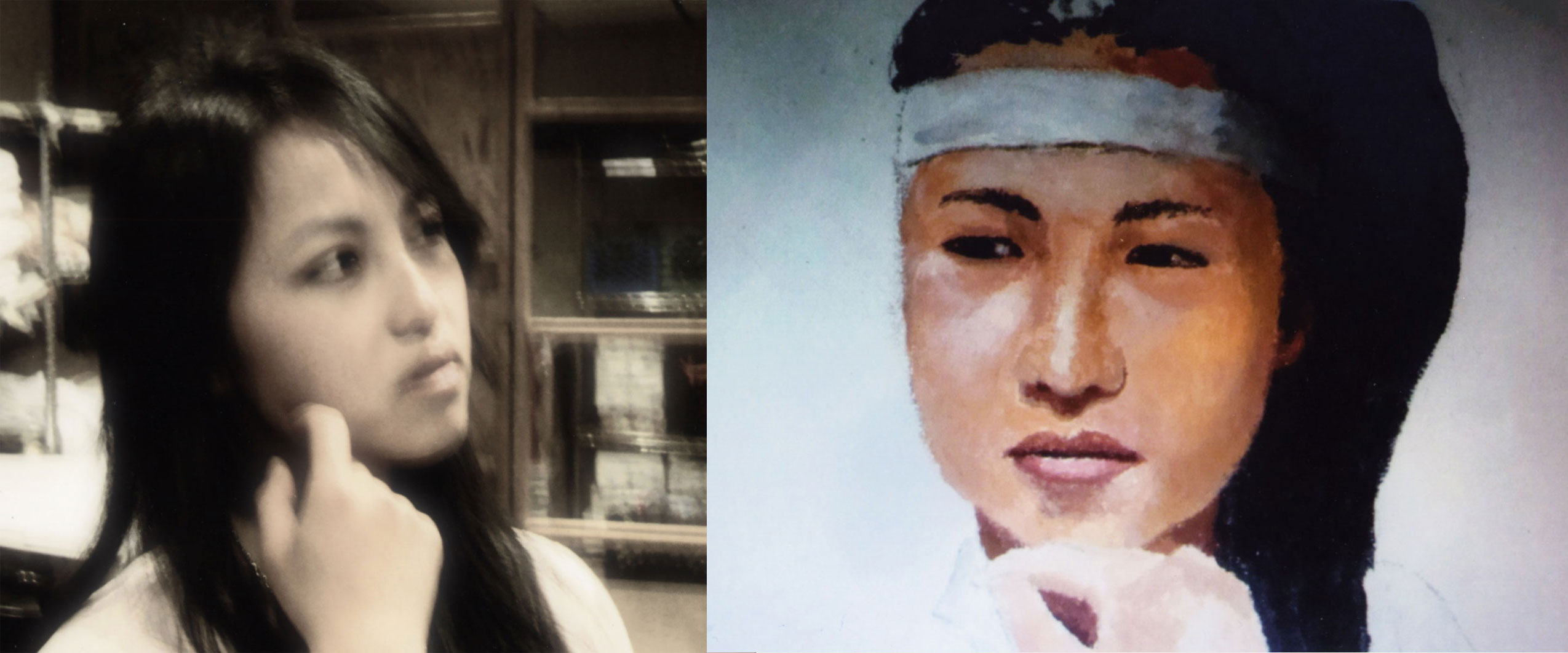
Eddie Flotte (an American watercolorist of rare imagination and fine technique) offered the action-packed, colorful illustrations to ANGKAT: The Cambodian Cinderella. Along with Dr. Men Riem, Cambodian educator and literary project advisor, Dr. Ashley Coburn assisted with the translation of the tale from French into English.
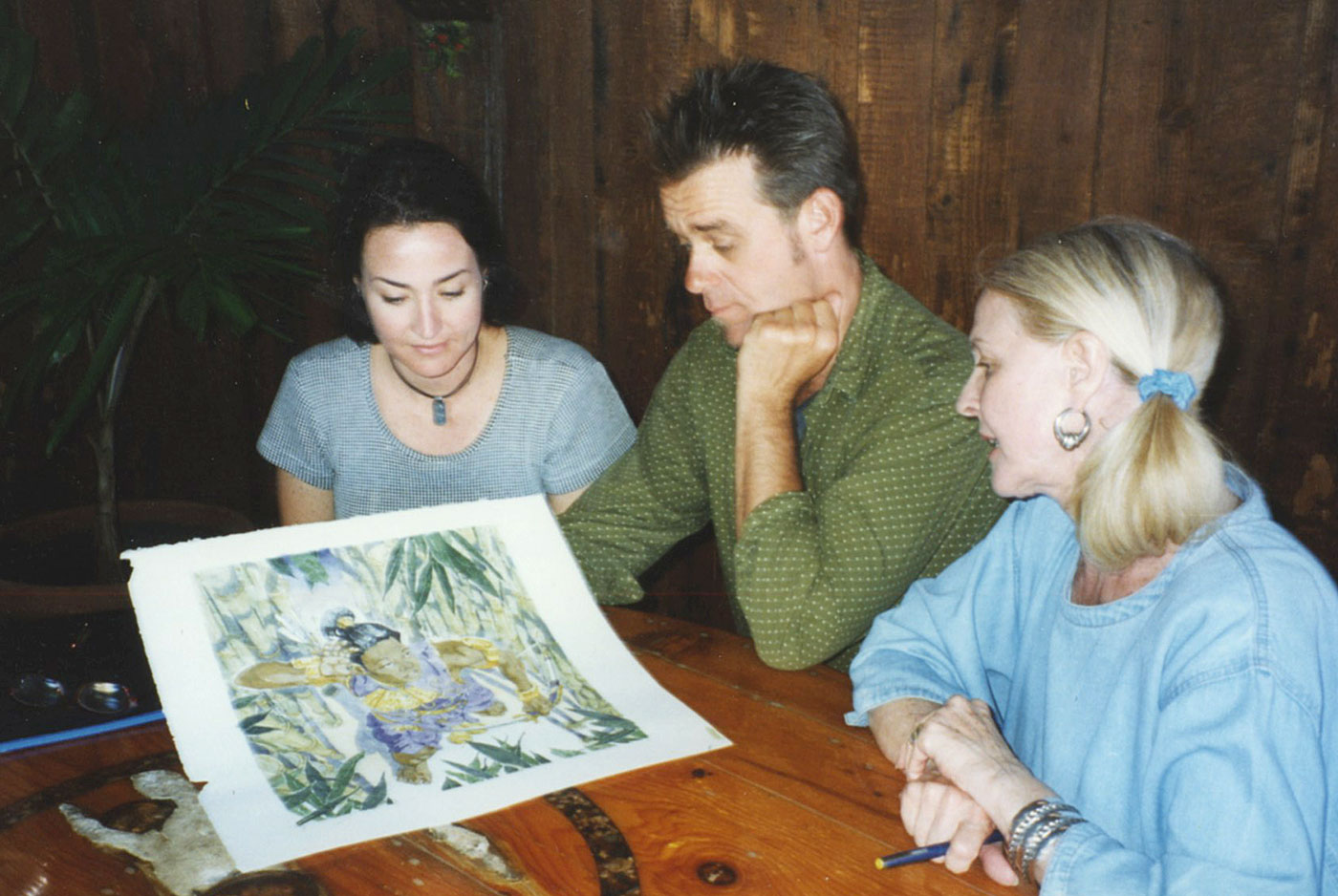
Dr. Ashley Coburn with Eddie Flotte and Dr. Jewell R Coburn
Mikki Senkarik (a professional American artist) contributed her charming artistic style to LANI and the SECRET OF THE MOUNTAIN: A Chinese Tale with its shorter version in six different Asian translations within the one book, all for purpose of offering comprehensive perspective on the differing Asian languages.
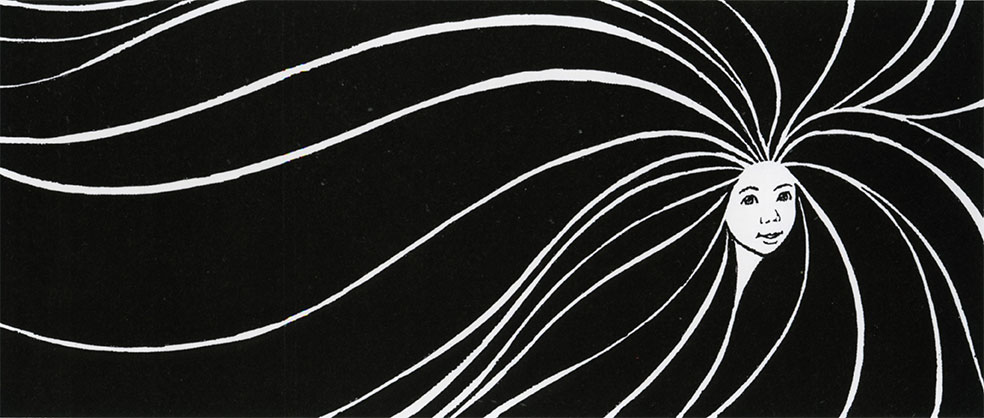
Illustration from Lani and the Secret of the Mountain by Mikki Senkarik